
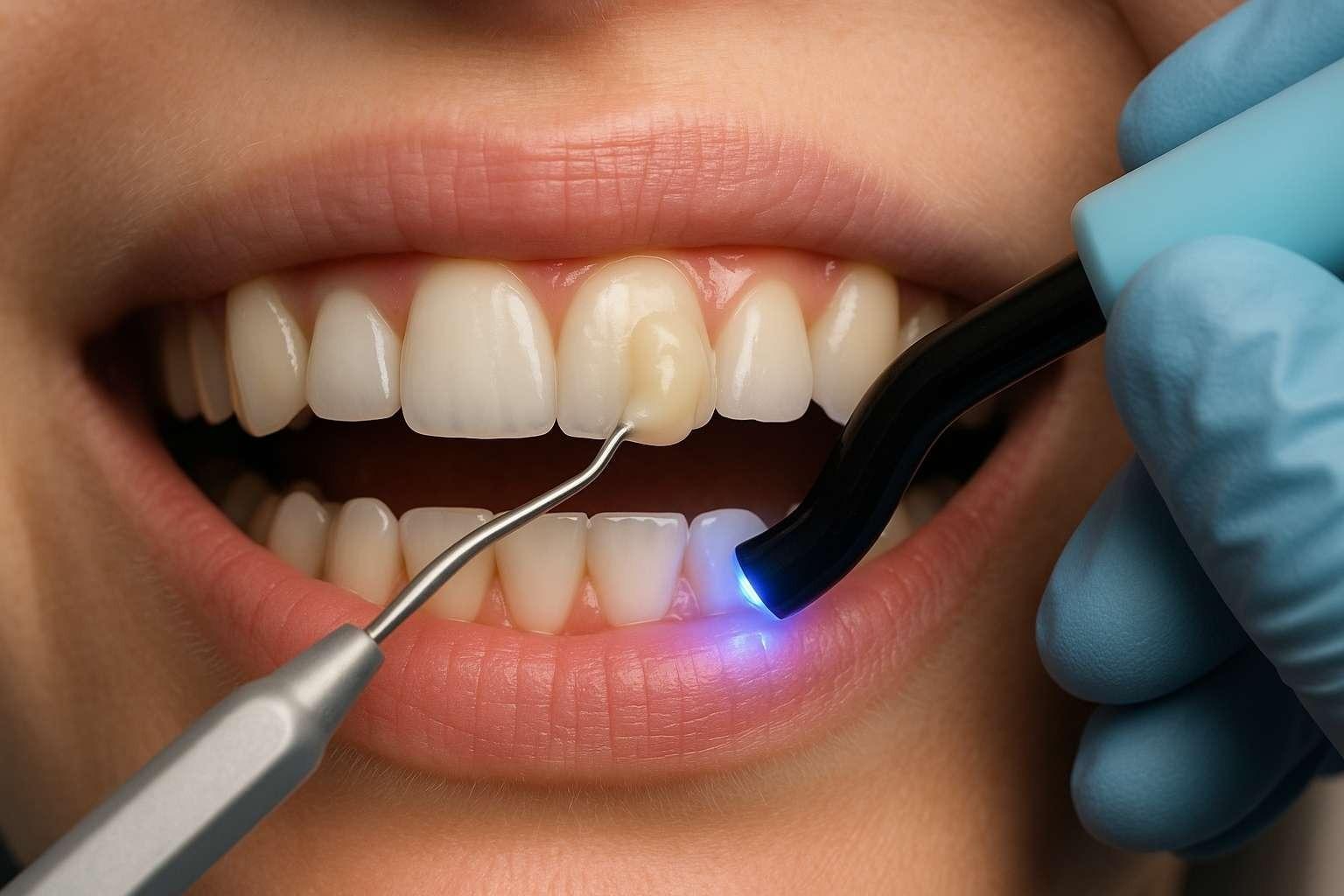
A large percentage of bonding appointments we see are not for major cosmetic concerns. More often, the patient points to a small chip on a front tooth that happened years ago, or a space between two teeth that has always bothered them in photographs. An edge that looks uneven compared to the other teeth is also a factor that draws patients to us. Dental bonding is often the treatment we discuss for these situations.
Dental bonding allows us to make small corrections without extensive dental work. Using this treatment option, we can rebuild a chipped corner, close those bothersome gaps, or improve the appearance of discoloured areas. If you are suffering from any of these issues, then a consultation can help.

We typically use dental bonding for cosmetic concerns involving the visible part of a tooth. The treatment is best suited to smaller changes where adding a limited amount of material can solve the problem without more extensive dental work.
A small chip on a front tooth can draw more attention than patients expect, particularly when speaking or smiling. Bonding allows us to rebuild the missing portion of the tooth. After polishing, we design the repaired area in a way that blends with the surrounding enamel.
Some patients are bothered by a small space between their front teeth; others notice uneven spacing that affects the overall appearance of their teeth when they smile. In appropriate cases, bonding can add width to selected teeth and reduce visible gaps without orthodontic treatment.
Certain stains do not respond well to whitening treatments. Especially, when one tooth is only affected, whitening might not be an appropriate option. In these cases, we use bonding to cover localised discolouration with a resin shade matching neighbouring teeth.
Both dental bonding and porcelain veneers can improve the appearance of teeth, but they are not interchangeable treatments. You can see the main differences in the table below:
Dental Bonding | Porcelain Veneers | |
Material | Composite resin | Custom-made porcelain |
Number of appointments | Often in one visit | Usually two or more visits |
Tooth preparation | Minimal in many cases | Requires some enamel modification |
Cost | Lower | Higher |
Durability | Suitable for minor corrections | More resistant to wear and staining |
Repairability | Often repaired directly | Replacement may be required if damaged |
Best suitable for | Small chips, gaps, localised discolouration | More extensive cosmetic changes involving multiple teeth |
Many bonding consultations begin with a simple question: “Can this tooth be fixed without a veneer or crown?” The consultation gives us an opportunity to examine the tooth and explain what bonding can realistically achieve in your situation. To arrange an appointment, contact our North York dental office by phone or use our online booking form. We will be happy to schedule a convenient time for your visit.
Bonding on a single tooth can often be completed within one visit, while treatment involving multiple teeth may require additional time.
Yes. Bonding is commonly used to repair small chips and minor fractures on front teeth.
Composite resin can pick up stains over time, particularly with frequent exposure to coffee, tea, red wine, and tobacco. Therefore, regular professional cleanings and good oral hygiene are necessary to maintain its appearance.
Coverage depends on the details of your dental plan and the reason the treatment is being performed. Some plans may provide coverage when bonding is used to restore a damaged tooth, while purely cosmetic treatment may not be included. Our team can help review your benefits before treatment.
In many cases, yes. Dental bonding can be used to reduce or close small gaps between front teeth by adding composite resin to one or both teeth. The amount of space present and the overall tooth proportions still matter.
We always take care of your smile
(647) 490-6828
Dental North York is an independent guide to dental care in North York, Toronto. We compare local clinics and explain what treatment costs against the ODA fee guide. We also track which practices accept CDCP. We do not provide dental treatment.
Copyright © 2026 All Rights Reserved.