
One of the most common concerns we hear from patients is that they have adjusted to living with a missing tooth. Some avoid chewing on one side of the mouth. Others have become frustrated with a loose denture or a gap that has gradually affected nearby teeth. Dental implants provide a fixed replacement for missing teeth by placing an artificial root within the jawbone and attaching a custom restoration above it. At our North York dental office, we begin implant treatment with a detailed examination of your teeth, gums, bite, and supporting bone. This step is crucial to figure out if an implant is appropriate, if additional procedures may be required, and which treatment option is most suitable for you.
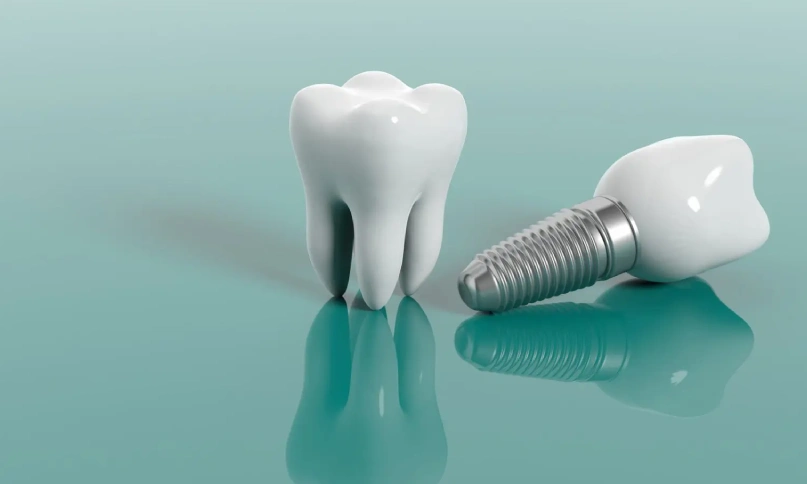
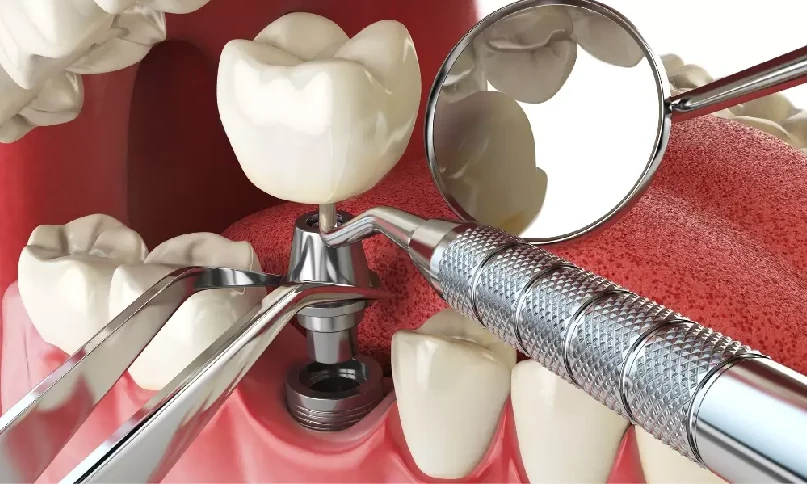
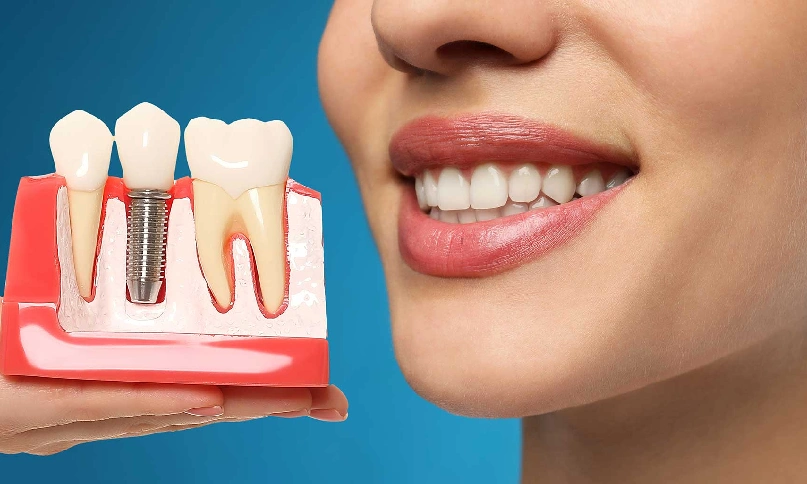
Unlike what you might think, an implant is not the visible tooth replacement itself. The implant is a small titanium post that is placed within your jawbone and acts as a substitute for the root of your missing tooth. Once healing has taken place and the implant has fused with the surrounding bone, a custom restoration will be attached above it. Depending on your treatment plan, that restoration may be a crown, bridge, or full-arch prosthesis. A dental implant typically consists of three parts:
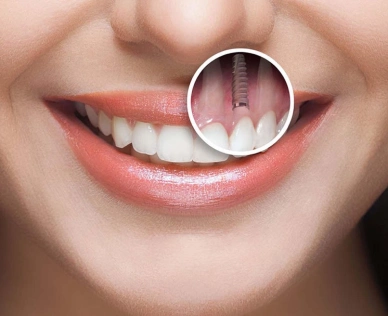
Dental implants have different types, among which the best option is chosen based on the number of missing teeth, the condition of the surrounding bone, and your dentist’s evaluation.
When a single tooth is missing, an implant can often be used to support an individual crown without altering adjacent healthy teeth. Benefits of a single implant may include:
Patients missing multiple teeth do not necessarily require an implant for every missing space. In many cases, a small number of implants placed strategically by your dentist can support a bridge and restore a larger section of the mouth. Depending on your clinical situation, treatment may involve:
For patients who have lost most or all teeth in an upper or lower arch, All-on-4 treatment may provide an alternative to a traditional removable denture. This method uses four strategically positioned implants to support a full arch of replacement teeth. Patients often report improvements in:
At the placement step, we position the implant fixture within the jawbone during a surgical procedure. Most patients return to normal daily activities within a short period, although healing continues beneath the gums.
Over the following months, the surrounding bone gradually attaches to the implant surface. This biological process, which is known as osseointegration, creates the stability required to support a restoration.
The final restoration, which may be a crown, bridge, or implant-supported prosthesis, is fabricated and secured to the implant. The restoration is adjusted to fit comfortably within your bite.
Implants, dentures, and bridges are all tooth replacement options, with their own advantages and limitations. There is no one best option; the best option may vary for you from another patient. However, here is an informational comparison:
|
Feature |
Dental Implants |
Dental Bridges |
Dentures |
|
Fixed in place |
Yes |
Yes |
No |
|
Replaces missing root |
Yes |
No |
No |
|
Requires support from neighbouring teeth |
No |
Yes |
No |
|
Helps maintain jawbone |
Yes |
Limited |
No |
|
Can replace multiple teeth |
Yes |
Yes |
Yes |
|
Removable by the patient |
No |
No |
Yes |
|
Typical lifespan |
Decades (with proper maintenance) |
No fixed lifespan. Varies. |
May require periodic replacement or adjustment |
You might notice minor bleeding, swelling, and tenderness. These are common and normal. Cold compresses and prescribed instructions can help you manage these symptoms.
Most patients experience a gradual reduction in swelling and discomfort. We recommend soft foods during this initial healing period.
The cost of implant treatment depends on these factors: the number of implants required, the type of restoration being placed, and whether additional procedures such as bone grafting or sinus augmentation are necessary. Because of this, we recommend an examination to get an exact cost and also in-person guidance on financing options.
If you have questions about insurance coverage, our team can help you figure out whether any portion of treatment may be reimbursable.
If you still have questions about candidacy, healing, treatment timelines, or alternatives to implants, it would be better to discuss them in person. A consultation allows us to evaluate the area of concern and discuss the available options based on your individual circumstances.
To schedule a free implant assessment, contact our North York office or request an appointment through our online booking form.
Most healthy adults with one or more missing teeth can be considered for implant treatment. However, the condition of your gums and jawbone will help us make the best choice.
Implant placement is performed under local anesthesia, so the area is numb during treatment. Mild soreness and swelling are common afterward and usually improve over the first few days.
Based on experience, many implant cases take several months from placement to the final restoration. The timeline may be longer if you need bone grafting or additional healing.
Dental implants can last for many years when supported by healthy gums and adequate bone. We should note that good oral hygiene and regular dental visits play a key role here.
Implant coverage in Ontario depends on the details of your insurance plan. Some policies may cover portions of treatment, while others provide limited or no implant benefits.
An implant replaces the tooth root and supports a restoration independently. A bridge relies on neighbouring teeth for support. A denture is a removable appliance used to replace multiple missing teeth.
In some situations, yes. Immediate implant placement may be possible when the bone and surrounding tissues are suitable.
Osseointegration is the process by which the jawbone bonds with the implant surface during healing. This connection provides the stability needed to support a replacement tooth.
Follow the post-operative instructions provided by your dentist and keep the area clean during healing. When treatment is complete, take care of your implants with regular brushing, flossing, and routine dental checkups.
We always take care of your smile
(647) 490-6828
Dental North York is an independent guide to dental care in North York, Toronto. We compare local clinics and explain what treatment costs against the ODA fee guide. We also track which practices accept CDCP. We do not provide dental treatment.
Copyright © 2026 All Rights Reserved.