
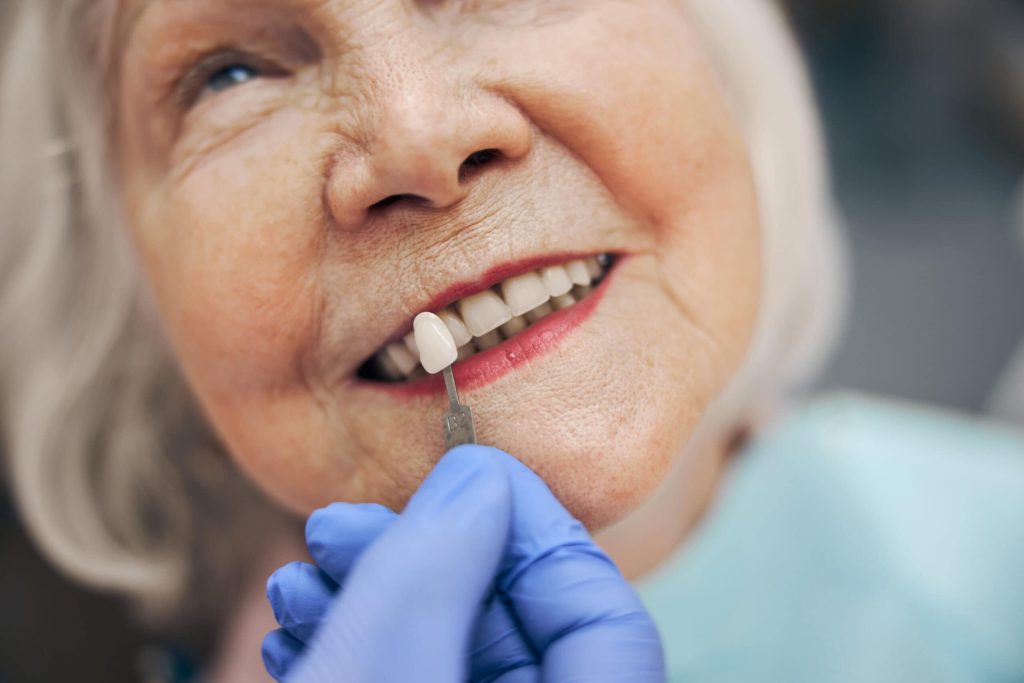
Over 9 million Canadians are eligible for the Canadian Dental Care Plan (CDCP), yet many still have not used it. If your adjusted family net income is under $90,000 and you do not have private dental insurance, you may qualify for meaningful coverage on the dental care you need. This guide to the government dental plan for seniors walks you through exactly who qualifies, what services are covered, how much you may pay, and the simple steps to apply, so you can finally get the treatment you’ve been putting off.
What Is the Canadian Dental Care Plan (CDCP)?
The Canadian Dental Care Plan (CDCP) is a new dental plan for seniors from the federal government that helps people, including seniors, get the dental care they need. It’s made for Canadians who don’t have private dental insurance and may struggle to afford dental visits. The goal is to make sure everyone, especially seniors, can keep their teeth and gums healthy without worrying about high costs.
Eligibility Criteria for Seniors (Updated as of July 2026)
To qualify for the Canadian Dental Care Plan (CDCP), seniors must meet all four of the following requirements. There is no longer an age restriction; the plan is open to all eligible Canadians, including those aged 65 and older. If you meet these criteria, you may receive help covering the cost of important dental care:
| Eligibility Criteria | Details |
| Age | No age restriction (previously limited to 65+, but now open to all ages)* |
| Residency | Must be a Canadian resident for tax purposes |
| Income | Adjusted family net income under $90,000 |
| Insurance | No access to private dental insurance or coverage (including through work, pension, professional organization, or purchased plans). Exception may apply for certain retirees who opted out of pension dental coverage before December 11, 2023, and cannot opt back in. |
| Tax Filing | You (and your spouse or common-law partner, if applicable) must have filed a tax return in Canada for the previous year |
*Note: The CDCP was initially launched for seniors aged 65+, which is why some people still believe it has an age requirement. In reality, the program is now open to eligible adults of all ages who meet the current eligibility criteria.
How Much Will You Pay? (Cost-Sharing Based on Income)
Your out-of-pocket cost depends on your household income. Here is what you can expect:
| Household Income | Government Covers | Your Co-Pay |
|---|---|---|
| Under $70,000 | 100% | $0 |
| $70,000 to $79,999 | 60% | 40% |
| $80,000 to $89,999 | 40% | 60% |
What Dental Services Are Covered for Seniors?
The Canadian Dental Care Plan covers many important dental services for seniors. This includes regular checkups, dental cleanings, fillings, tooth extractions, and dentures. Some bigger treatments, like root canal treatments and crowns, may also be covered. However, cosmetic procedures like teeth whitening are not included. The plan helps make sure seniors can get the dental care they need to keep their teeth healthy and strong without paying too much.
| Category | Service | Preauthorization Required |
| Diagnostic & Preventive | Dental exams (complete, routine, specific, emergency) | No |
| Diagnostic & Preventive | X-rays | No |
| Diagnostic & Preventive | Cleaning (scaling) | No |
| Diagnostic & Preventive | Fluoride applications | No |
| Diagnostic & Preventive | Sealants | No |
| Restorative (Basic) | Permanent fillings | No |
| Restorative (Basic) | Temporary fillings | No |
| Restorative (Basic) | Pain control for diseased teeth | No |
| Restorative (Basic) | Other cavity treatments | No |
| Endodontic | Root canal treatments | No |
| Endodontic | Pulpectomies | No |
| Endodontic | Infection/pain relief procedures | No |
| Endodontic | Re-treatment of previous root canals | Yes |
| Periodontal | Cleaning under the gumline | No |
| Periodontal | Treating abscesses | No |
| Periodontal | Bonding for mobile teeth | Yes |
| Periodontal | Post-surgical evaluations | Yes |
| Periodontal | Non-surgical gum disease management | No |
| Restorative (Major) | Posts and post removal | No |
| Restorative (Major) | Crown repairs and re-bonding | No |
| Restorative (Major) | Crowns | Yes |
| Restorative (Major) | Cores to support crowns | Yes |
| Restorative (Major) | Posts for crown | Yes |
| Removable Prosthodontics | Complete dentures (standard and temporary) | No |
| Removable Prosthodontics | Denture repairs, relines and rebases | No |
| Removable Prosthodontics | Denture lining for comfort and healing | No |
| Removable Prosthodontics | Complete immediate and overdentures | Yes |
| Removable Prosthodontics | Partial dentures | Yes |
| Oral Surgery | Removal of teeth and roots | No |
| Oral Surgery | Surgical removal of tumours and cysts | No |
| Oral Surgery | Surgical incisions and draining | No |
| Oral Surgery | Treatments for broken jaw bones | No |
| Anesthesia & Sedation | Minimal sedation (conscious) | No |
| Anesthesia & Sedation | Moderate sedation | Yes |
| Anesthesia & Sedation | Deep sedation | Yes |
| Anesthesia & Sedation | General anaesthesia | Yes |
| Orthodontics | Medical necessity cases only (2025, spending limit applies) | Treatments for broken jawbones |
Note: Orthodontic services are not currently covered under the CDCP. In the future, coverage may become available for medically necessary orthodontic treatments with prior approval. A specific start date has not yet been announced.
Emergency for seniors: If you suddenly experience severe tooth pain, a broken tooth, swelling, or infection, the CDCP covers emergency dental exams and many related urgent services when recommended by a participating provider. Contact a CDCP dentist right away, confirm your coverage is active, and ask for a written estimate so you know any co-payment or extra costs before treatment begins. Early care is especially important as we age.
How to Apply for the Canadian Dental Care Plan (Step-by-Step)
Applying for the Canadian Dental Care Plan (CDCP) is a straightforward process if you know which option works best for you. Eligible applicants can apply online, by phone, or in person through Service Canada. Follow the steps below to learn how to submit your application, and what happens after you apply.
1. Apply online (fastest and preferred)
Online application is the fastest and preferred method for applying to the CDCP. Most applicants can complete the process through My Service Canada Account (MSCA), while other online options are available for those who cannot use MSCA.
Option A: My Service Canada Account (MSCA) (recommended):
- Go to the official My Service Canada Account page and sign in (or create an account if you don’t have one).
- On your MSCA dashboard, find the “Canadian Dental Care Plan” section.
- Click “Apply for Canadian Dental Care Plan coverage” and follow the on-screen instructions.
- Choose “digital” as your communications preference so you receive email updates.
- Submit. You will receive an application code/confirmation.
Option B: If you cannot use MSCA:
- Go to the official Canada.ca CDCP application page.
- Complete the digital form with the same information listed above.
- Select digital communications preference and submit.
Processing usually takes several weeks. You can later check status online using your application code or member ID.
2. Apply by phone
If you cannot complete the application online, you can apply by phone through Service Canada. Make sure you have your personal information and required documents ready before calling:
- Call Service Canada at 1-833-537-4342.
- Have your SIN, personal details, and tax information ready.
- A trusted person (friend, relative, caregiver, translator) can help you on the call, but you must give clear verbal consent during the call.
- For a legal delegate (power of attorney, mandate, trusteeship), the delegate must first submit proof of authority before applying on your behalf.
3. Apply in person
Visit any Service Canada Centre. Bring your SIN and identification. Staff can help you complete the application.
4. Mail-in / paper applications
There is no paper application form for the CDCP. Applications must be submitted online, by phone, or in person.
Mail is used only for submitting proof of legal authority if a delegate is applying for you:
- Include a cover letter with your full name, SIN, a statement that the documents are for the CDCP, the delegate’s phone number, and a return address.
- Send original documents or certified copies to the regional Service Canada address (Ontario example): Service Canada Canadian Dental Care Plan PO Box 5100 Station D Scarborough, ON M1R 5C8
Once processed, Service Canada contacts the delegate so they can complete the application.
After you apply
After submitting your application, there are a few important steps to complete before using your CDCP coverage:
- You will receive a confirmation letter (by mail or email) with your CDCP member ID, coverage start date, and co-payment level (if any).
- Sun Life will later mail a welcome package that includes your member card.
- Do not book dental appointments before your coverage start date.
- Check application status online or through MSCA using your application code or member ID.
Once you receive your CDCP member card (or have your member ID and start date), you can use it at participating clinics, including ours in North York. We can help verify coverage and coordinate benefits.
For the most up-to-date details, always check the official Government of Canada pages:
Applying Without a SIN or Tax Return
If you do not have a SIN, You will generally need to get one (or a Temporary Tax Number from the Canada Revenue Agency) before you can complete a CDCP application. Adults without a SIN cannot usually finish the online or phone application.
If you have not filed a tax return, You must file your return and receive the Notice of Assessment first. Without it, the CDCP cannot assess your adjusted family net income.
You can ask a trusted person (a family member, friend, or caregiver) to help you apply by phone. You must be present and able to give clear consent during the call.
If someone has legal authority to act for you (for example, through a power of attorney), they can apply as your delegate. They will need to provide proof of that authority.
Scam Warning: The CDCP application itself is free. Never pay anyone who claims they can “guarantee” your approval or process the application for a fee.
Multilingual Support for CDCP
Official information about the Canadian Dental Care Plan is available in both English and French on the Government of Canada website (canada.ca). You can switch languages at the top of any page.
If you prefer to speak with someone in another language, call Service Canada at 1-833-537-4342. Interpreters are often available to help you with your application, renewal, or questions about your coverage.
Comparing the CDCP and OSDCP
Seniors in Ontario may qualify for one or both of two government programs that help with dental costs: the federal Canadian Dental Care Plan (CDCP) and the provincial Ontario Seniors Dental Care Program (OSDCP).
Key differences at a glance:
| Feature | Canadian Dental Care Plan (CDCP) | Ontario Seniors Dental Care Program (OSDCP) |
| Who it serves | Eligible Canadian residents of any age (including seniors) | Ontario residents aged 65 and older |
| Income limit | Adjusted family net income under $90,000 | Annual net income of $25,480 or less (single) or $42,290 or less (couple) |
| Private insurance | Must have no access to private dental insurance | Must have no other dental benefits (CDCP is allowed) |
| What you pay | Percentage of CDCP fees based on income (0%, 40%, or 60% co-payment). Clinics may charge more than the CDCP fee schedule | Free for covered routine services. Dentures are partially covered |
| Where you can go | Most participating private dental offices | Public Health Units, partner Community Health Centres, and Aboriginal Health Access Centres |
| Coverage period | Annual benefit period (typically July 1 – June 30); must renew each year | Ends July 31 each year; most people are automatically verified for renewal |
| How to apply | Online via My Service Canada Account, canada.ca, or by phone (1-833-537-4342) | Online at seniors.accerta.ca or by mail |
Important notes for Ontario seniors:
- You may qualify for both programs if you meet the criteria for each. The plans can coordinate coverage to avoid duplication.
- OSDCP focuses on free routine care through designated public providers and has a much lower income threshold.
- CDCP offers broader access (including private clinics like ours) and covers a wider range of services, though you may have co-payments or balances if the clinic’s fees exceed the CDCP schedule.
- Always ask your dental provider for a written estimate before treatment so you know what portion (if any) you will need to pay.
CDCP Coverage Renewal and Benefit Periods
The Canadian Dental Care Plan provides coverage for one benefit period at a time. Each benefit period ends on June 30. To keep your coverage without interruption, you must renew every year.
How the benefit period works:
- Coverage runs for a single year ending June 30.
- Your co-payment level and eligibility are confirmed again at renewal based on your most recent tax information.
Annual renewal process
As a CDCP member, you must renew your coverage every year to confirm you still meet all four eligibility requirements (no private dental insurance, adjusted family net income under $90,000, Canadian resident for tax purposes, and filed tax returns).
Renewals typically open in the spring. For the next benefit year (2027–2028), renewals will open in spring 2027. The exact dates will be announced on the official Government of Canada website.
What you need to renew:
- Your CDCP member ID
- Social Insurance Number (SIN) for each person (if available for children)
- Confirmation that you and your spouse/common-law partner (if applicable) have filed the previous year’s tax return and received the Notice of Assessment
- Updated address and contact information if anything has changed
You can renew online through My Service Canada Account (MSCA) or canada.ca, or by phone at 1-833-537-4342 (TTY: 1-833-677-6262).
What happens if you miss the renewal deadline
If you do not renew by the deadline:
- Your coverage ends on June 30.
- You can submit a new application afterward, but there will usually be a gap in coverage until the new application is approved.
- Any dental care you receive during the gap won’t be covered or reimbursed later.
Important tip: Always check that your coverage is active before booking or receiving treatment. You can verify your status online or by calling Service Canada. Choose digital communications in your account so you receive renewal reminders by email.
Updating Your CDCP Information and Eligibility
As a senior on the Canadian Dental Care Plan, keep your address, contact details and communication preferences current through your My Service Canada Account or by calling 1-833-537-4342. If your income or private insurance status changes, or if you receive an eligibility review letter, update the information promptly so your coverage and co-payment level stay accurate and you continue receiving important notices without interruption.
Private Insurance vs. Government Programs: Which Makes Sense for You?
If you already have private dental insurance (through work, a pension, or a plan you buy yourself), you generally cannot join the Canadian Dental Care Plan (CDCP). The CDCP is designed for people who do not have access to private coverage.
Here’s a clear side-by-side look at the main differences:
| Feature | Private Dental Insurance | Canadian Dental Care Plan (CDCP) |
| Who pays the premiums | You (or your employer/pension plan) | Government – no premiums for you |
| Eligibility | Anyone who buys or is offered a plan | Must have no private dental coverage + income under $90,000 |
| What you pay out-of-pocket | Premiums + possible deductibles, co-pays, and amounts above plan limits | Income-based co-payment only (0%, 40% or 60% of the CDCP fee) + any amount your dentist charges above the CDCP fee schedule |
| Coverage level | Varies widely by plan; often has annual maximums and waiting periods | Wide range of preventive, restorative and other services at fixed CDCP fees; no annual maximum listed by the program |
| How claims work | You or your dentist submit to the insurance company | Most participating dentists bill the plan directly |
| Best for | People who already have workplace or pension coverage, or who want broader benefits and can afford premiums | Eligible seniors and others without private insurance who want lower out-of-pocket costs |
Quick tip: Before any treatment, always ask your dentist for a written estimate that shows both the clinic’s fee and what the CDCP (or your private plan) will cover. This helps you see the exact amount you will need to pay.
If your situation changes (for example, you lose private coverage), you can check whether you now qualify for the CDCP through the official Government of Canada website.
Clinic Fees vs. CDCP Fee Schedule: What You Need to Know
The Canadian Dental Care Plan pays according to its own established fee schedule. Your dentist’s usual fees may be higher than these amounts.
When that happens, you are responsible for:
- Any difference between the clinic’s fee and the CDCP fee, plus
- Your income-based co-payment (if your adjusted family net income is $70,000 or higher).
Even if the CDCP covers 100% of its established fee, you may still have an out-of-pocket cost if your provider charges more.
What you should do: Before any treatment, ask your dentist for a written estimate. This should clearly show:
- The clinic’s full fee
- The amount the CDCP will cover
- The exact amount you will need to pay
Getting this estimate in writing helps you plan your costs in advance.
FAQs
What is the new dental plan for seniors in Canada?
The Canadian Dental Care Plan (CDCP) is a federal program that initially offered coverage to uninsured seniors aged 65 and over without private dental insurance. It has since expanded and is now open to all eligible Canadians of any age who meet the income and other requirements.
When can seniors apply for the Canadian Dental Care Plan?
Applications for seniors opened in phases starting in December 2023. The plan is now open to all eligible Canadians, including seniors aged 65 and older.
Will seniors get free dental care in Canada?
Seniors with an adjusted family net income under $70,000 receive 100% coverage of the CDCP established fees. Those earning between $70,000 and $89,999 receive partial coverage (60% or 40%). Keep in mind that if your dentist charges more than the CDCP fee schedule, you may still have an out-of-pocket cost.
Are dental implants covered for seniors in Canada?
No. Dental implants and all related procedures are not covered under the CDCP.
Are dentures covered for seniors in Canada?
Yes. The CDCP covers complete and partial dentures, as well as repairs, relines, and adjustments. Some types of dentures require preauthorization.
Can I use CDCP alongside my private insurance?
No. One of the core eligibility requirements is that you do not have access to private dental insurance. If you currently have private coverage, you do not qualify. If your private coverage ends in the future, you may become eligible at that time.
My spouse is also a senior. Do we each need to apply separately?
Yes. CDCP coverage is individual. Each person must submit their own application and meet the eligibility criteria on their own. If both of you qualify, you can each benefit from the plan independently.
How long does it take to receive my CDCP card after applying?
Processing times vary. After your application is approved, you will receive a confirmation letter with your member ID and coverage start date. Sun Life will then mail a welcome package that includes your physical member card. This usually takes several weeks.